Chumoukedima, September 5: The Eastern Nagaland Peoples’ Organisation (ENPO) has expressed satisfaction “to some extent” with the Frontier Nagaland Territorial Authority (FNTA) Bill, 2026, passed by the Nagaland Legislative Assembly on Friday, stating that it has accepted the third option of having the proposed arrangement for a period of 10 years.
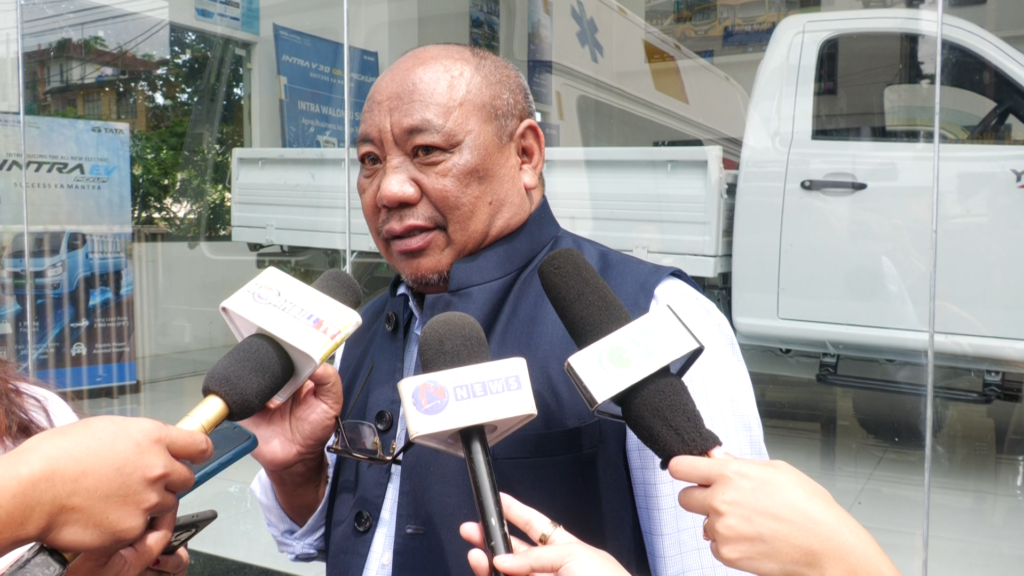
Speaking on the development, ENPO President said the organisation had accepted the 10-year arrangement as provided under the third option, while noting that certain matters were still pending with the Government of India.
He said the ENPO had not yet received the written communication from the authorities, although they were aware that the decision had been put in writing.
On the ENPO’s demand for a financial package of around ₹5,000–₹10,000 crore, the ENPO President said the matter rests with the Central Government and that there has been no response from the Centre so far.
He said the FNTA Bill was passed only on Friday and the process was currently underway, adding that the organisation would wait for the subsequent developments.
On the Memorandum of Understanding (MoU), he described it as being similar to a “constitution” for the arrangement, outlining the commitments and framework agreed upon by the parties.
He further informed that a Joint Monitoring Committee comprising representatives of the ENPO, Government of Nagaland, Ministry of Home Affairs (MHA) and the FNTA would be constituted to monitor the implementation of the agreement from time to time.
The ENPO President also highlighted the differences between the FNTA Bill constituted in March and the Bill passed by the Assembly on Friday. He said that in the earlier Bill, the State Government had maintained that it would not be able to provide legislative autonomy.
However, he said the commitments made in the MoU would continue to stand, adding that the present process was aimed at providing a legal framework to the arrangements through consultations and decisions taken by the State Government.
According to him, the FNTA would ultimately be given a political arrangement with legislative autonomy in respect of the subjects transferred to it.
He maintained that while the process had now moved into the legal and legislative stage following the passage of the Bill, the ENPO would continue to monitor its implementation and the fulfilment of the commitments made under the MoU.