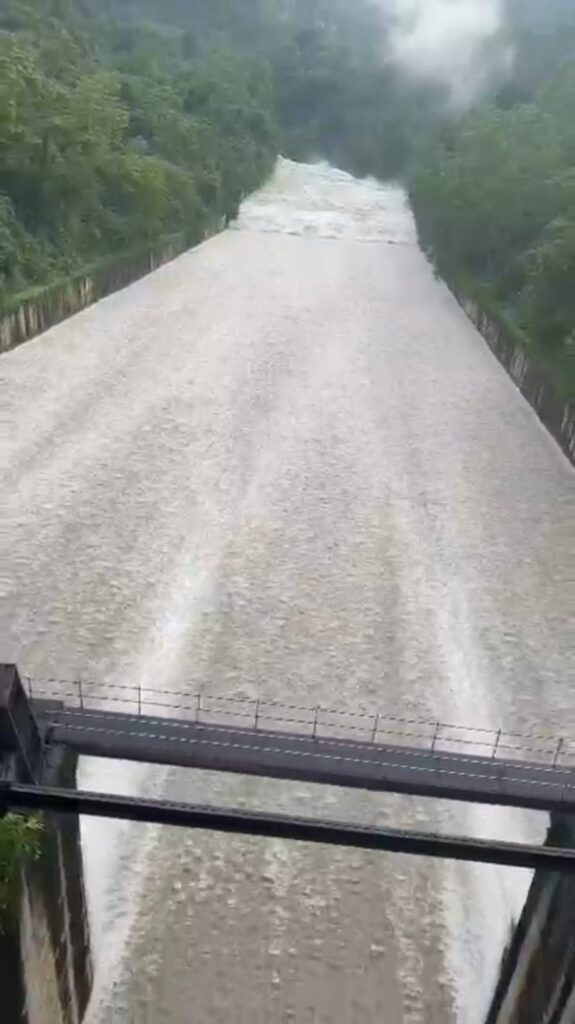
Dimapur, August 3: Amid widespread speculation on social media linking the release of water from the Doyang Hydroelectric Project to flooding in Assam’s Jorhat and Sivasagar districts, authorities have categorically denied the claims, stating that the information is false.
Officials of the Doyang Hydroelectric Project told Nagaland News Network (NNN) that water released from the dam does not flow into Jorhat or Sivasagar. Instead, the Doyang River joins the Brahmaputra near Numaligarh in Golaghat district after merging with the Dhansiri River downstream, making it impossible for the dam’s discharge to directly cause flooding in those districts.
The head of the Doyang Hydroelectric Project urged the public to refrain from spreading misinformation and clarified that the dam’s water release is a carefully managed operation carried out under a strict Standard Operating Procedure (SOP). Water released from the dam takes approximately five to six hours to reach Golaghat due to the river’s winding course, and the discharge is measured and regulated based on inflow and water levels.
Authorities said the District Disaster Management Authorities (DDMAs) of Wokha and Golaghat remain in constant coordination, sharing real-time data to effectively manage downstream water flow. Officials are continuously monitoring rainfall and reservoir inflow, adjusting the spillway gates as required to ensure public safety.
The project authorities further informed NNN that the Doyang River is currently flowing below the danger level in Wokha. They also explained that flooding downstream would still occur even if no water were released from the dam, as several tributaries—including the Dhansiri River—contribute significant volumes of water into the Doyang River system during periods of heavy rainfall.
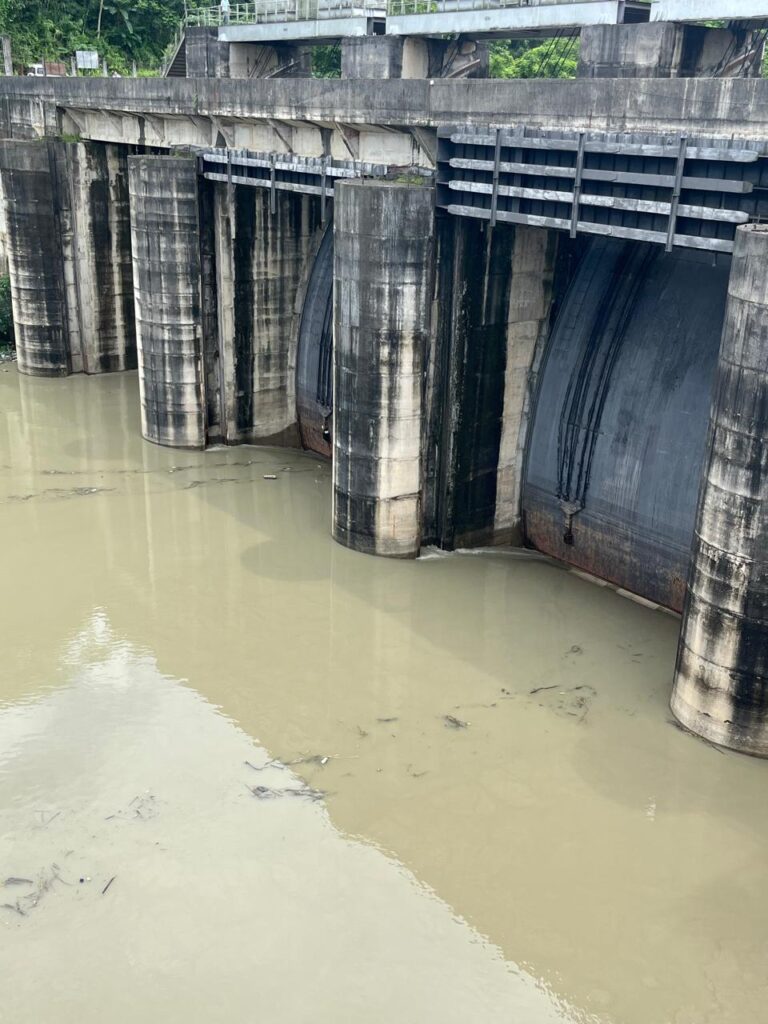
At present, all four spillway gates remain open, although officials said the discharge is being gradually reduced, with the gate opening expected to be lowered from one metre to around half a metre depending on the inflow.
An early warning system remains in place, and according to officials, no settlements downstream within the Nagaland section have been adversely affected so far. Authorities have appealed to the public to rely only on verified information and avoid circulating unverified claims regarding the dam’s operations.