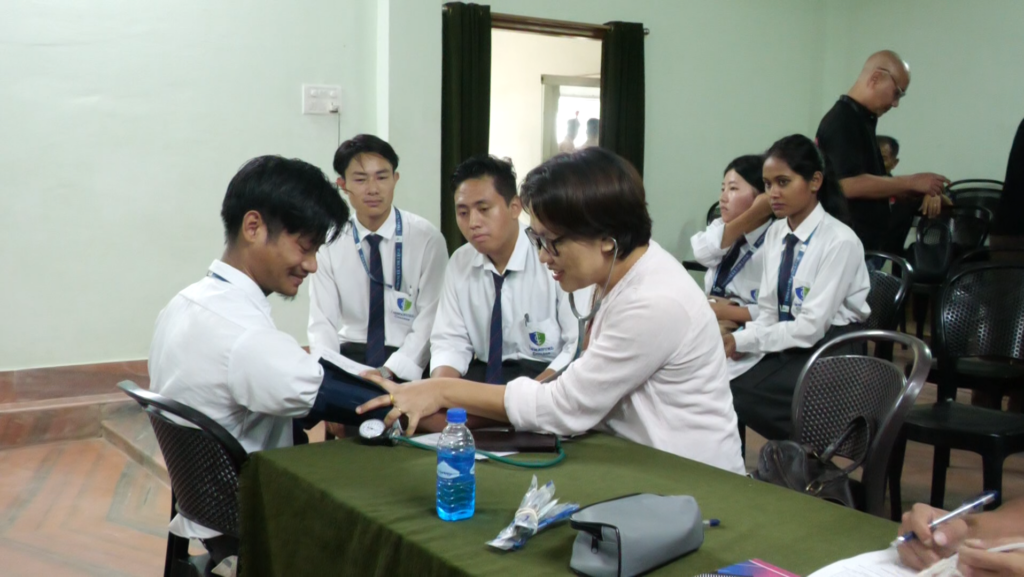
Dimapur, OOctober 2: National Voluntary Blood Donation Day was observed at Immanuel College, Dimapur, on Wednesday with a blood donation drive and awareness programme on HIV/AIDS and voluntary blood donation.
The programme was organised by the Blood Center, District Hospital Dimapur, in collaboration with the Voluntary Blood Donors Association of Nagaland and with support from the Nagaland State Blood Transfusion Council. Deputy Commissioner of Dimapur, Dr. Tinojongshi Chang, attended the programme as Guest of Honour.
Speaking on HIV/AIDS, Temsuyanger Aier, Monitoring and Evaluation Assistant, DISHA Office under the Chief Medical Officer, Dimapur, highlighted the continued global burden of HIV. He said that according to the World Health Organization, an estimated 41 million people were living with HIV at the end of 2025, while around 1.2 million people acquired HIV during the year. He also stressed that while there is currently no cure for HIV, effective prevention, diagnosis, treatment and care have made HIV a manageable chronic health condition.
Dr. Rongsenmar Lkr, Medical Officer at the Blood Center, District Hospital Dimapur, emphasised the importance of regular, voluntary and unpaid blood donation. He said voluntary donors provide a reliable source of blood and urged eligible people to come forward willingly, stressing that misconceptions surrounding blood donation should be addressed through awareness.
Addressing the gathering, DC Tinojongshi Chang said blood cannot be manufactured in laboratories and can only come from willing human donors. He described voluntary blood donation as an expression of humanity, compassion and social responsibility, and encouraged students to develop a spirit of service and contribute to the well-being of others.
The programme highlighted the theme of voluntary blood donation as an act of humanity and encouraged young people to become regular voluntary blood donors. The event brought together students, faculty members, healthcare workers, volunteers and civil society representatives.